
Polyester, Reconsidered: A Calmer Look at What You Wear to Work Out

You may have noticed a new genre of social media content lately: people tossing away their activewear into the bin, declaring it’s “toxic” because it happens to be made from plastic. It’s a striking image, and a tempting narrative. After the swap from plastic bags to totes, plastic straws to paper, are our workout clothes next in line?
What‘s Actually in Your Activewear?
Most of the leggings, sports bras, and fitted sets you reach for, whether for Pilates, strength training, tennis, swimming, or a morning run, are woven from a blend of polyester, nylon, and spandex (also sold under the name Lycra or elastane). Together, these fibres deliver the sleek, seamless, second-skin feel that defines modern activewear.
Each fibre earns its place. Polyester is lightweight and quick-drying, ideal for managing sweat. Nylon adds durability, helping garments hold their shape after repeated wear. Spandex provides the stretch and recovery that creates that body-hugging fit. Blended, they produce fabrics that move with you and dry quickly.

Credit: Pinterest
Cotton, soft and breathable as it is, has largely fallen out of performance wear because it absorbs and retains moisture. Mid-workout, it grows heavy, damp, and slow to dry. Plant-based and recycled fibres are entering the market, but polyester and nylon still dominate for one reason: they offer the best combination of durability, stretch, moisture management, and affordability. But it’s worth asking: at what cost?
Why Does Your Skin React After a Workout?
One of the most common concerns about synthetic activewear is whether it triggers bacne, pimples, or folliculitis. Acne is driven by a combination of heat, sweat, excess oil, bacteria, and friction, which is why it tends to flare in hot, humid climates [1]. Exercise recreates the same conditions: body temperature rises, sweat mixes with oil and bacteria, and movement adds friction [1]. Humidity stimulates the sebaceous glands to produce more oil, and Cutibacterium acnes thrive in warm, moist conditions [2] [3].
This is where fabric matters. Cotton absorbs sweat effectively but holds onto it, reducing airflow and increasing friction when damp. Synthetics don’t absorb much water themselves; instead, they wick moisture away from the skin and spread it across the outer surface of the fabric to evaporate quickly [4]. In theory, that should help.
So why do some people still break out after wearing synthetic activewear? Clearly the fibre itself usually isn't the culprit. What's added to it often is.
The chemistry hiding in your wardrobe
Dye is typically the first offender. Natural fibres like cotton, silk and wool show low sensitisation to reactive dyes, but disperse dyes (DSD), commonly used to colour polyester, nylon and synthetic blends, are small, lipophilic molecules that migrate easily onto the skin and provoke irritation [5].
Biocides are another. They’re applied during manufacture and transport, and often to inhibit odour, a particular concern with synthetics. Finishing treatments such as wrinkle-resistant or “durable-press” coatings, which often contain formaldehyde and can trigger allergic contact dermatitis [6]. This isn’t exclusive to polyester or nylon. Any garment marketed as durable-press, regardless of fibre, can cause the same response.
As brands are only required to list fibre composition and care instruction, the chemicals used during processing rarely appear on the label, which makes the issue even less transparent.
The Permastink Problem [7]
Polyester might feel better than cotton mid-workout, but it has one unmistakable downside: it develops permanent odour, often called permastink.
Cotton's natural fibre structure lets water and detergent penetrate easily, washing away sweat-derived compounds like fatty acids and aldehydes. Polyester, on the other hand, is hydrophobic, which makes it harder to remove sebum and oily residues in a standard cycle. Those residues linger after washing, feeding the bacteria responsible for odour.
Credit: Pinterest
Natural fibres also bind odour molecules due to their reactive sites and greater internal surface area. Polyester releases them more readily. Studies have shown that even when bacterial counts are similar, washed polyester garments smell stronger than cotton or wool.
Synthetic Underwear: A Separate Case
Whether or not you're exercising, synthetic underwear is worth considering separately.
Because synthetic fabrics are hydrophobic, it relies on evaporation and airflow to manage moisture. That works for loose athletic clothing, but underwear sits tightly against the skin in an area with very limited ventilation. Warmth and moisture get trapped, creating an environment where bacteria and yeast flourish. Bacteria also tend to remain on the well-oxygenated surface of synthetic fibres rather than penetrating into the fabric as they do with cotton. In a region that already carries a high bacterial load, that surface-level lingering can encourage further growth.
For women, synthetic underwear has been linked to yeast infections, bacterial vaginosis, and vulvar irritation, including itching and burning. Many seamless styles include a cotton gusset, which is a reasonable compromise, but to maintain the seamless finish, the gusset is often bonded with adhesive rather than sewn. That reduces breathability further, and lower-quality adhesives may contain formaldehyde, volatile organic compounds (VOCs), or other irritating residues.

Credit: Pinterest
For men, temperature is the deciding factor. Sperm production is sensitive to heat, and elevated scrotal temperature has been associated with lower sperm concentration, motility, and morphology [8]. Polyester-containing underwear has shown more pronounced negative effects on sperm quality in animal studies, while cotton produced little or no measurable change [9]. Men who are trying to conceive may want to lean toward cotton or other breathable natural fabrics.
Claims linking synthetic underwear to lower testosterone are less well supported. Testosterone is produced in the Leydig cells, which appear less sensitive to minor temperature fluctuations than sperm generation is. Early studies tested polyester slings, a contraceptive garment worn on the scrotum, and found significant reductions in sperm counts [10]. That's difficult to extrapolate to everyday underwear, where tightness and temperature matter more than fibre alone. Diet, exercise, sleep quality and chronic stress have all shown a more direct influence on testosterone levels [11] [12].
Chlorine, Salt, and the Life of a Swimwear
Blended synthetic materials give swimwear its multidirectional elasticity, which supports muscle compression and, in turn, performance. But chlorine, added to pools for sanitisation, quietly works against the fabric.

Credit: Pinterest
Polyamide/polyester and spandex blends were tested under sun exposure and chlorinated water to mimic the real-world conditions [13]. The breaking force dropped by 65% after 300 hours, with chlorine identified as the main cause. The resulting tears reduced moisture management and increased the fabric’s thickness and mass. That translates to a less comfortable wear (itching from fibre breakage) and a loss of the fit and support the garment was designed to offer.
Salt accelerates wear too. One study found that both sea water and chlorinated water sped up light-induced degradation of nylon/spandex fabrics, with the greatest loss of strength and elongation occurring in sea water under UV exposure [14].

Credit: Pinterest
Research comparing natural and synthetic swimwear is limited, largely because natural fibres like cotton absorb and retain water, making them impractical in the pool. Synthetics remain the standard, but they come with a distinct environmental cost.
Microplastics
Polyester and nylon are, fundamentally, plastic. Most synthetic polyesters used in clothing are non-biodegradable.
Swimwear is one of the more direct pathways for microplastics to enter waterways. A field study in the Salt River in Arizona recorded an eightfold increase in microplastic concentration after peak afternoon hours compared with the morning [15]. More than 70% of these particles were fibres, and 78% of the detected compounds were polyamide.
Everyday wear and washing add to the load. A single conventional wash can release around 4,000 fibres per gram of fabric, and up to 400 fibres per gram can shed during just 20 minutes of normal wear [16]. Washing with detergent releases four times more microplastics than washing with water alone [17]. Once airborne or in waterways, these particles enter the food chains, and food and water are the main routes by which they reach the human body. Particles smaller than 100 nanometres may be small enough to cross into the bloodstream and reach multiple organs [18]. Recent research suggests microplastics in water may also act as carriers for other toxins [19].
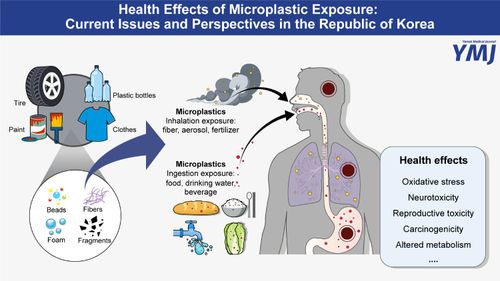
Credit: Health Effects of Microplastic Exposures: Current Issues and Perspectives in South Korea
Skin contact is usually a minor route, but exercise complicates that. Studies suggest sweating may change how tiny plastic particles clump together, which could influence how easily they pass through the skin [20]. Friction and heat during a workout may further encourage the release of micro- and nanoplastics and increase skin contact with them.
There’s no established safe exposure level yet, and the full health impact is still being studied. Research using cells, organoids, and animal models suggests microplastics may contribute to oxidative stress, DNA damage, organ dysfunction, metabolic disturbances, immune dysregulation, neurotoxicity, and reproduction and development [21]. Similar abnormalities have been observed in marine life [18].
Where the Real Risk Lives
A quick scroll through wellness content will tell you polyester causes everything from hormone disruption to cancer. The fabric is just the carrier. The formaldehyde, PFAS, and textile chemicals used to finish the garment, are the real culprit.
One study detected formaldehyde in 20% of clothing samples (n=120) marketed to pregnant women, babies, and toddlers [22]. The mean concentration was 8.96 mg/kg, well below the EU legal limit of 75 mg/kg. The highest reading, 55.7 mg/kg, was found in organic cotton panties. On average, formaldehyde levels were actually higher in eco-friendly garments (10.4 mg/kg) than in regular ones (8.23 mg/kg). Organic cotton only refers to pesticide-free cultivation. It says nothing about chemical treatments applied during manufacturing.
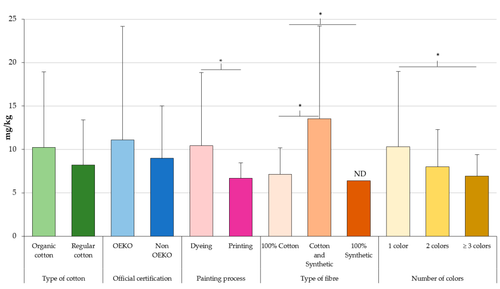
Figure: Formaldehyde concentrations according to a number of factors, including cotton production, OEKO-TEX® Standard 100, painting process, type of fibre, and number of colours. * An asterisk indicates significant differences at p < 0.05. ND: Not detected.
Credit: Early-Life Exposure to Formaldehyde through Clothing
You may also have heard about the recent investigation into Lululemon over "forever chemicals" [23]. The concern centres on PFAS, a family of thousands of synthetic compounds. One well-known member of this family is PTFE (polytetrafluoroethylene), better known by the brand name Teflon, which is widely used in non-stick cookware. PFAS exposure has been linked with sufficient evidence to decreased vaccine antibody response, dyslipidemia in adults and children, increased risk of kidney cancer, and reduced foetal growth [24]. More limited evidence suggests links to breast cancer, testicular cancer, and thyroid dysfunction [24].
BPA and phthalates are also common, particularly in heat-transfer logos, printed designs, and stain-resistant finishes. BPA can be released from textiles, especially under wet conditions, and in some cases estimated exposure from wet clothing exceeded the Tolerable Daily Intake by several hundred-fold [25]. Phthalates can be absorbed through skin, with exposure accumulating the longer you wear a garment. Some, like DEHP, persist after repeated washing and have even shown higher concentrations post-wash [26]. Both are endocrine-disrupting chemicals that interfere with oestrogen, androgen, and thyroid signalling, and have been associated with reproductive disorders, altered metabolism, and developmental effects [25] [27].
Where to Look for Natural Alternatives?
A handful of brands are building activewear around natural and organic materials:
- Mate the Label and Pact use non-toxic, natural, and organic materials. Most of their active pieces blend organic fibres with a touch of spandex or elastane for stretch.
- Indigo Luna and Studio K work primarily with regenerated plant-based fibres, recognised for their minimal environmental footprint under the EU Ecolabel.
- Jungmaven uses hemp blended with wool or organic cotton. Hemp is breathable, durable and less prone to pilling than cotton.
- Sol Department is a strong option for men who want 100% natural cotton sportswear.
- Community Clothing offers plastic-free swimwear for people who want to stay active while wearing natural-fibre clothing.
Brand claims aren't always reliable, so check the label. Synthetics often hide behind other names: spandex, elastane, Lycra, polyamide, PU/PVC coating, acrylic, vinyl, and recycled polyester (which, despite the name, is still plastic).

Credit: Pinterest
The marketing language deserves its own scepticism. "Cotton touch," "quick dry," "sweat wicking," and "breathable" are simply describing what synthetics do well. Subtler phrases like "performance fabric," "technical fabric," "seamless," "compression," and "second-skin" are designed to sell you a feeling. Trust the label, not the story.
So, Should You Still Wear It?
Yes, if it serves you.
Synthetic blends are genuinely better for heavy-sweat activities, where they keep you cooler and lighter than cotton ever could. A few habits make them safer to live with:
- Wash new pieces before wearing. This noticeably reduces chemical residues.
- Rinse off and change out of damp activewear as soon as possible after a workout. Sweat, oil, and bacteria left to mingle on warm skin is the recipe for irritation [1].
- Rotate your activewear and replace it when washing stops removing odour. Trapped residues build up over time.
- For underwear, choose cotton with a sewn gusset over a glued synthetic one. Your body prefers dry, cool, and unrestricted.
This article is for informational purposes only and does not imply any endorsement or commercial relationship with the brands mentioned.
Want to dive deeper and explore more articles? Download the Lifestack app to unlock the full experience: