

What is Raw Milk?
Raw milk, also known as unpasteurized milk, refers to milk that has not undergone the pasteurization process. It can come from various sources, including cows, goats, sheep, and even camels.
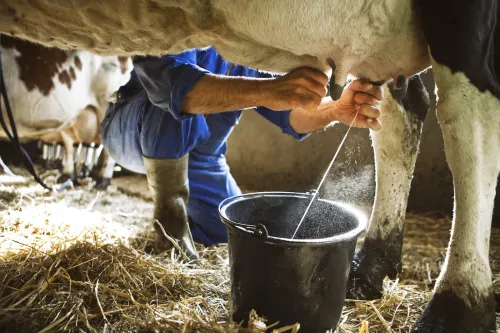
Image: Milking Cow
[2]A brief history
Pasteurization, developed by French scientist Louis Pasteur in 1864, is now a widely used method for preserving liquid foods. The process involves heating the liquid to at least 60°C (140°F) for a specific period of time to destroy harmful pathogens and extend shelf life. Originally, Pasteur devised this method to address spoilage issues in wine. It was later adapted for use in a variety of other products, including beer, milk, fruit juices, syrups, vinegars, eggs, and more.

Image: Louis Pasteur
[3]Pasteurization and the germ theory
Germ theory is one of the currently accepted theories, based on the idea that diseases are caused by tiny living organisms, germs, such as bacteria, viruses, and fungi, that invade the host's body and interfere with its normal functions. The widespread use of pasteurization today is directly linked to the development of germ theory. Louis Pasteur demonstrated that wine spoilage was caused by microbial contamination, not by spontaneous generation as many believed at the time. He proved that these microbes came from the environment, rather than appearing out of nowhere.
This breakthrough laid the foundation for modern disease prevention by emphasizing the control of exposure to harmful microorganisms. It led to successful efforts in limiting the spread of bacterial diseases such as E. coli, bovine tuberculosis, and brucellosis, and was later applied to combat foodborne pathogens like E. coli O157:H7, Campylobacter, Listeria, and Salmonella. These principles continue to justify the use of pasteurization in food preservation, especially in the ongoing public debate surrounding the safety and regulation of raw milk.
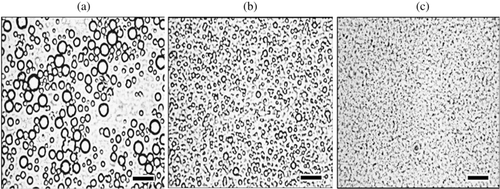
Graph: Microscopic images (125× magnification) of fat globules in raw milk sample, before and after homogenization
(a) fat globules in raw milk, (b) fat globules in the raw milk sample after 125× of ultrasonic homogenization, (c) fat globules in the raw milk sample after 125× of ultrasonic homogenization. The black scale bar in the bottom-right corner represents 10 μm.
[4]Traditional vs. modern usage
Consuming milk from other mammals stands out as one of humanity's most distinctive and conventional eating habits, with evidence tracing back 6,000 years through calcified dental plaque from Neolithic British and African populations, and milk fats and lipids found on pottery shards from early farming sites in Eastern Europe dating to approximately 7,000 years ago. Milk consumption was regular among early farmers and pastoralists who domesticated dairy animals, primarily cattle, sheep, and goats. As these domesticated animals spread across different regions, so too did the practice of dairy consumption, adapting to local cultures and environments.
Raw milk is commonly used in the production of various dairy derivatives, including cheese, butter, and cream, not only for its nutritional properties but also to enrich the sensory and cultural aesthetics of human diets.
For example, Camembert, a moist, soft, creamy, surface-ripened cow’s milk cheese originating from France, was traditionally made using raw milk. Today, the AOC (Appellation d'Origine Contrôlée) certified variety Camembert de Normandie, which accounts for roughly 10% of total Camembert production, is legally required to be made exclusively from unpasteurized milk.
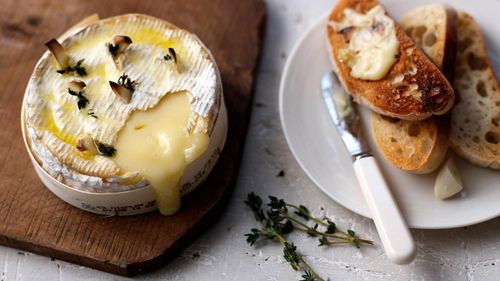
Image: Baked camembert with garlic bread
[5]Mainstream vs. Alternative Views
Raw milk is widely recognized to potentially contain pathogenic bacteria and parasites associated with foodborne illness, which include tuberculosis, diphtheria, typhoid, Campylobacter, Listeria, Brucella, E. coli (especially E. coli O157:H7), Salmonella, Streptococcal infections, Cryptosporidium. These pathogens have caused documented outbreaks linked to consumption of raw milk and its products in recent decades, in both developed and developing countries.
Many countries consider raw milk unsafe and regulate or ban its sale. For instance, Singapore and Canada completely ban commercial sales of raw milk for human consumption. Others, including Germany, Norway, Finland, the UK (except Scotland), New Zealand, Australia, and certain U.S. states, allow direct purchases from farms or retail sales, but these are often accompanied by explicit warning labels and strict production standards.
In some Asian countries, Ireland, and parts of South Africa, production and sale are permitted under specific conditions. Raw milk used for private consumption, animal or pet feeding, or for making products like soap is often legal but sometimes criticized as exploiting loopholes in the law.
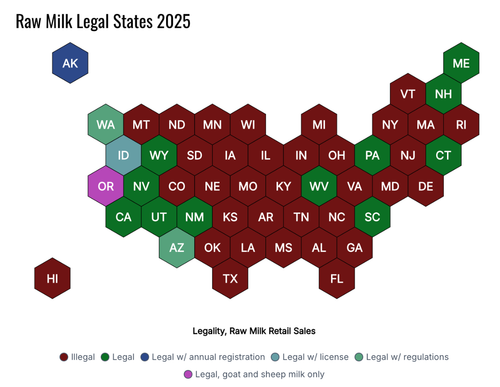
Image: Raw Milk Legal States 2025
[6]What the science says
Epidemiological data have highlighted the public health risks associated with raw milk consumption. From 2007 to 2020, 83% of hemolytic uremic syndrome (HUS) cases linked to E. coli O157:H7 infection in North America were attributed to 20 outbreaks involving raw dairy, 14 of which were specifically linked to raw milk consumption.
Concerns have also emerged around raw milk as a vector for viral infections. Highly Pathogenic Avian Influenza (H5N1) has been detected in raw milk from infected dairy cattle, with studies showing that viral RNA can persist for at least 57 days at 4°C without degradation. In contrast, pasteurization effectively eliminates detectable virus levels and significantly reduces RNA concentration.
Other pathogens demonstrate varied behavior in raw milk: salmonella levels tend to decline, E. coli O157:H7 and listeria often persist, and campylobacter generally dies off during refrigeration. In Iran, raw milk samples revealed high prevalence rates of norovirus GI (34.95%) and GII (7.72%), as well as rotavirus (14.6%), astrovirus (12.8%), and tick-borne encephalitis virus (21.3%). Hepatitis A virus (HAV) has also been found in raw milk and raw dairy products across regions such as Egypt and Iran, with reported prevalence ranging from 1.5% to 25%.
Documented outbreaks linked to HAV-contaminated raw milk further underscore its potential as a public health threat. While pasteurization greatly reduces the risk of milkborne disease, outbreaks can still occur due to improper pasteurization, post-pasteurization contamination, or the growth of heat-resistant or cold-growing pathogens like Listeria during refrigeration.
For example, in 1985, contaminated pasteurized milk from a dairy plant in Illinois sickened thousands across multiple U.S. states due to Salmonella. The contamination resulted from a valve issue that allowed pasteurized milk to mix with raw milk harboring pathogens, highlighting post-pasteurization contamination risks. Pasteurized products can become contaminated from equipment, personnel, or the environment after processing, emphasizing the importance of strict hygiene.
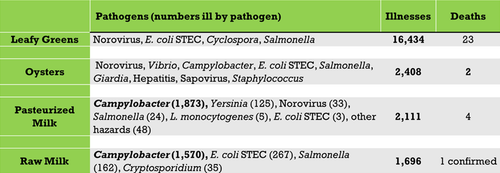
Epidemiological evidence from the United States between 2005 and 2020 shows that foods such as leafy greens, fruits, peanut butter, and oysters have caused far more deaths, illnesses, and hospitalizations than raw milk. Over a 15-year period, cucumbers alone were linked to 36 deaths and 2 major outbreaks, compared with only 3 deaths and 1 outbreak associated with all types of milk combined. Older statistics further indicate that on a per-serving basis, raw milk carries about seven times the illness risk of pasteurized milk, yet deli meats, cold hot dogs, and pâté pose roughly ten times the risk of raw milk, while smoked seafood and pre-cooked shrimp present similar risks.
Table: Burden of illness from foodborne outbreaks for four foods over the years 2005-2020
While pasteurization played a crucial role in reducing disease outbreaks during the rise of industrial urban living, proponents like naturopathic physician Ron Schmid emphasized that raw milk had been consumed safely for centuries prior to industrialization. This historical perspective challenges the prevailing assumption that raw milk is inherently hazardous, suggesting instead that the risks are more context-dependent and manageable with proper hygiene and handling. Furthermore, the beneficial bacteria in grass-fed raw milk are suggested to inhibit harmful microbes.
Advocates like Journalist David Gumpert argue that raw milk preserves a range of beneficial components, such as enzymes, probiotics, and delicate proteins, that are often destroyed or altered during pasteurization. They claim that these living elements contribute to improved gut health, reduced allergies and lactose intolerance, enhanced immune function, and a richer, more natural taste. However, alternative health advocate Ray Peat has noted in interviews that modern “quick flash” pasteurization results in minimal vitamin loss, showing that some nutritional differences are smaller than often assumed.
Critics of strict government regulation view the crackdown on raw milk as an infringement on food rights and personal autonomy. They argue that pasteurization mandates often reflect bureaucratic overreach and a precautionary mindset that ignores the nuances of small-scale, responsible raw milk production.
Underlying these debates is a broader scientific tension between competing views of health and disease. The ongoing discussion between germ theory and internal environment theory draws on the work of thinkers like French chemist Antoine Béchamp, French physiologist Claude Bernard, and Russian zoologist Élie Metchnikoff. These perspectives challenge the dominance of Louis Pasteur’s germ theory and invite a more holistic view of microbial life, which is not solely as a threat, but as a necessary and dynamic part of human health.
Who it might help and/or harm?
There’s no guide to follow, but people at high risk of complications from consuming raw milk, such as pregnant women, the elderly, and children, should be aware of the risks before consuming it.
Common questions
Is raw milk safe to drink?
Rather than making a blanket statement of “safe” or “unsafe,” here are a few important facts to consider: Pathogens: Raw milk can carry harmful microbes, including E. coli O157:H7, Listeria, Salmonella, Hepatitis A, and even H5N1. However, pasteurized milk is not entirely risk-free either.
- Epidemiology: From 2005 to 2020 in the United States, leafy greens, fruits, peanut butter, and oysters were linked to far more deaths, illnesses, and hospitalizations than raw milk.
- Nutrition: The nutritional differences between raw and pasteurized milk are minimal. Scientific evidence shows no significant loss of most nutrients after pasteurization or UHT treatment.
- Enzymes and probiotics: While certain enzymes and antimicrobial systems in raw milk are deactivated by pasteurization, their activity at standard refrigeration temperatures is already limited. Moreover, studies suggest that to produce a meaningful physiological effect, the number of viable probiotic organisms consumed must be thousands of times higher than the levels typically found in raw milk, and most of these organisms do not survive the harsh environment of the digestive tract.
- So, is raw milk safe? The answer isn’t black and white. While its nutrition is similar to pasteurized milk, the risk of harmful bacteria is real, which is why safety remains the key issue.
Does raw milk taste better?
Many people say raw milk tastes better because it is creamier, richer, and has a more complex flavor than pasteurized milk, which comes from its natural cream content. The taste can also vary depending on the animal’s diet and environment, which makes it different from mass-produced milk. However, whether it tastes better is subjective and often influenced by personal preference, culture, and even nostalgia.
I’m lactose intolerant, but I can drink raw milk without issues. Why is that?
Lactose intolerance is caused by a deficiency of lactase, the enzyme required to digest lactose. Both raw and pasteurized milk contain similar amounts of lactose, and neither provides lactase, which is why people with lactose intolerance generally struggle with both forms. However, some individuals with lactose intolerance report being able to consume raw milk without discomfort. One possible explanation is the presence of lactobacilli in raw milk, which may produce lactase in the intestine and assist with lactose digestion. Scientific studies have also reported a significant increase in Lactobacillus abundance in the gut microbiome of raw milk consumers over a twelve-week period.
This article is for informational purposes only and does not constitute medical advice. Consult a healthcare provider before making changes to your health routine.