

Everyone is fancying olive oil shots again. You might have picked it up from a celebrity's morning routine, from a grandmother who's been doing it for decades, or from the gradually fading "clean girl" aesthetic. A shot of golden olive oil with lemon first thing in the morning feels like a proper wellness move: tilt your head back, drink it in one go, and you're ready for the day. But you might still have questions. What does the combination actually do? Is it really worth building a habit around, or is it just another trend people are pretending to love?
The Real Hero: Olive Oil
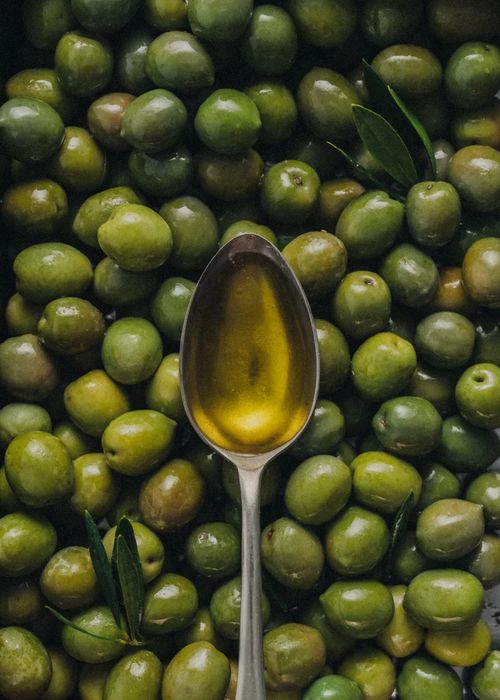
Most of the health claims attached to this trend trace back to high-quality extra virgin olive oil (EVOO). EVOO brings monounsaturated fats (MUFA), polyphenols, oleocanthal, vitamin E, and oleic acid to the table. These are the compounds behind the benefits people associate with the shot, from digestion to inflammation to skin health.
Credit: Pinterest
What the Shot Actually Does (and What's Just Wellness Talk)?
Does olive oil "coat the gut"?
The idea that olive oil forms a protective "coating" in the stomach sounds appealing, but the science doesn't back it up. There's no strong evidence that it creates a physical barrier in the digestive tract.
What olive oil can do is slow gastric emptying, which may translate to longer-lasting fullness and a more comfortable feeling after meals.
Bloating and the messier side of digestion
Skin and hair
Some people swear the shot eases bloating. The MUFA and polyphenols in olive oil are linked to broader metabolic and anti-inflammatory activity, but bloating is complex. It can be driven by intestinal gas, fermentation, food intolerance, constipation, IBS, or coeliac disease. Where dietary fat does help: it can soften stool and reduce friction in the intestines, making digestion feel smoother. It also stimulates bile secretion, which supports the breakdown of fats and keeps things moving. In wellness circles, this gets framed as "detoxification." Physiologically, it's just your digestive system doing its job.
As for the claim that vitamin C from lemon may help with gallstones, there's a connection worth mentioning. Vitamin C plays a role in bile acid metabolism, where cholesterol is converted into bile acids, and in theory a deficiency could contribute to cholesterol buildup, a key factor in gallstone formation [1]. But current evidence doesn't support vitamin C as a meaningful determinant for either preventing or clearing gallstones.
Energy, fullness, and weight
Anti-inflammatory effects
Fat provides a slower, steadier energy source than rapidly absorbed carbohydrates. Some people experience this as fewer crashes and more stable mornings. It can also promote satiety, reducing the urge to snack, which may indirectly support weight management.
On the lemon side, vitamin C supports the production of carnitine, a compound that helps transport fatty acids into cells for energy use [2]. It's also involved in several enzymes related to fat metabolism [2]. So adequate vitamin C intake may support more efficient fat oxidation, though this is a long way from a miracle fat-burner.
There's also a more straightforward explanation that often gets overlooked. If olive oil improves bowel regularity or eases constipation, the result can look like weight loss on the scale, even though it mainly reflects changes in gut content and transit rather than actual body fat.
A common recipe calls for about one tablespoon of olive oil paired with lemon juice. That's roughly 120 kcal, which isn't negligible if weight management is part of your picture. A small but meaningful addition to factor into your daily balance.
Anti-inflammatory effects
Side Effects
People with sensitive digestive systems, particularly IBS, gallbladder conditions, or gastroesophageal reflux disease (GERD), may find that a concentrated shot of oil causes more discomfort than benefit.
Fat digestion relies on bile. A large dose of oil arriving all at once places extra demand on bile production. If some of that fat isn't fully broken down in the small intestine, it can continue into the large intestine and contribute to looser stools.
Fat also stimulates the gastrocolic reflex, a normal response that increases gut motility after eating. In sensitive individuals, this may speed up intestinal movement, leaving less time for water absorption in the colon. The result can be looser stools and, for some, diarrhea.
Start small and pay attention to how your body responds.
Choosing the Right EVOO
There's no single "best" bottle. Quality depends on origin, harvest year, olive variety, and freshness. Finding one that suits both your palate and your standards matters more than chasing a particular label.
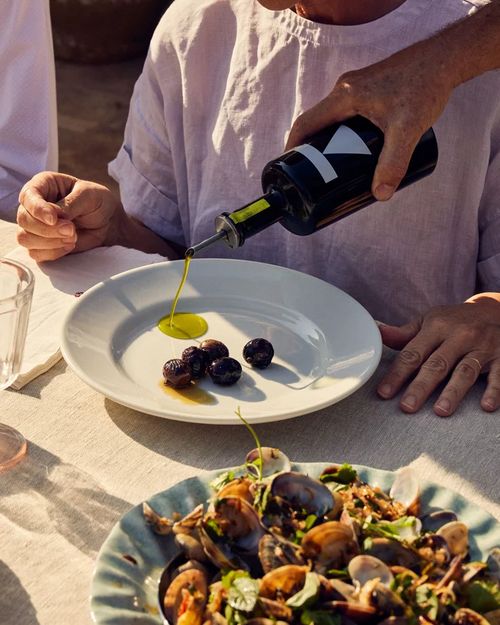
Well-regarded options: Corto Olive Oil (USA), Cobram Estate (Australia), Castillo de Canena and Oro del Desierto (Spain).
Solid everyday choices: California Olive Ranch and Kirkland Signature (Costco) both tend to have a milder, fruitier profile with a smoother finish, making them versatile for cooking when bold Mediterranean character isn't the goal.
Lesser-known oils might be excellent too. A few things worth checking: Look for the right wording. "Extra Virgin Olive Oil" is the standard you want.
- Country or region of origin, harvest year, single-estate production, or geographical certifications like PDO/PGI
- Varieties matter if polyphenols are your priority. Koroneiki, Picual, and Moraiolo tend to deliver higher polyphenol levels. Brands such as Potou Melan, ABEA, Palacio de los Olivos, and Gonnelli 1585 offer well-regarded monovarietal EVOOs.
- Choose smaller, dark bottles. Light and oxygen degrade olive oil over time, affecting both flavour and nutritional quality.
- One fun detail: that peppery throat hit after a sip is often a sign of oleocanthal, a polyphenol found in higher amounts in fresh, unrefined EVOO [5]. Think of it as a quality indicator you can actually taste.
How to Habit-Stack it into Your Routine?
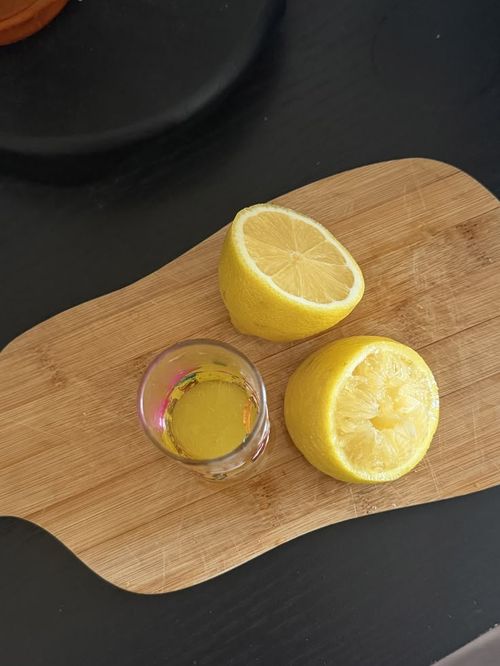
The preparation is simple. Start with a small amount, one teaspoon (5 mL) to one tablespoon (15 mL) of EVOO, mixed with an equal measure of freshly squeezed lemon juice. Some people stir the two together in a small glass; others prefer to take them one after the other. Depends on your taste preference.
Lemon juice is mainly there to balance the taste. The greasy mouthfeel of straight olive oil can be a bit much on its own, and the acidity of lemon helps cut through that. But if lemon isn't your thing, you can leave it out entirely.

If the idea of a morning shot doesn't appeal to you, there are gentler and far more enjoyable ways to get the same ingredients in. Olive oil and lemon juice have long been part of Mediterranean cooking. As early as fourteenth-century Italy, the combination was used to marinate and season dishes such as chicken stew [6].
Today, it remains a favourite, especially as a salad dressing. The richness of olive oil balanced with the brightness of lemon creates a flavour that feels fresh, layered, and satisfying all at once.
You can try one of our olive oil dressing recipes with your next salad bowl. A simple way to bring a little Mediterranean flavour to your table and make the most of seasonal produce.
This article is for informational purposes only and does not imply any endorsement or commercial relationship with the brands mentioned.