

What is Vegetable (Seed) Oil?
Vegetable oils are oils extracted from the seeds, fruits, or other edible parts of plants. The term seed oils is often used interchangeably with vegetable oils in everyday language, but more specifically refers to oils derived from seeds, such as corn oil, canola oil, cottonseed oil, soybean oil, sunflower oil, safflower oil, grapeseed oil, and rice bran oil.
While all seed oils fall under the broader category of vegetable oils, not all vegetable oils come from seeds. Oils like olive oil (from the fruit), peanut oil (from legumes), and almond oil (from nuts) are also considered vegetable oils. The earliest known use of the term vegetable oil dates back to the mid-1600s, in a translation by English physician John French, according to the Oxford English Dictionary. Originally, vegetable oil was a broad term used to describe oils derived from plant sources, in contrast to animal fats such as lard and tallow. However, since most so-called vegetable oils are not actually made from vegetables, we will refer to them more accurately as plant oils or plant-based oils throughout this article. When discussing oils specifically extracted from seeds, we will use the term seed oils.
A brief chemistry
Fatty acids are the building blocks of fats, just like sugars are for carbohydrates and amino acids are for proteins. There are three major types of fatty acids: saturated (SFA), monounsaturated (MUFA), and polyunsaturated (PUFA), ranked from most to least chemically stable, referring to how easily they form byproducts during refining, cooking, and eventually inside our bodies. The mix of fatty acids in a fat determines whether it is liquid or solid. In general, oils high in PUFAs tend to remain liquid, while those low in PUFAs tend to be solid at cooler temperatures. The nomenclature is often linked to the source of the fat rather than its physical state, with plant-derived fats commonly referred to as "oils" and animal-derived fats as "fats." This may explain why coconut oil is categorized as an oil rather than a fat, despite its higher saturated fat content.
The term "bond" refers to how carbon atoms in a fatty acid chain are connected, either by single or double bonds. A fatty acid with no double bonds is called saturated fat, meaning its carbon atoms are fully saturated with hydrogen. MUFAs contain one double bond, while PUFAs have two or more.
PUFAs include omega-3, omega-6, and omega-9 fats, also written as n-3, n-6, and n-9. Among these, omega-3 and omega-6 are considered essential fatty acids because the human body cannot produce them and must obtain them through the diet. These essential fats are commonly found in seed oils such as flaxseed oil (omega-3) and soybean or sunflower oil (omega-6). In contrast, SFA and MUFA can be synthesized by all mammalian cells from carbohydrates or proteins.
A brief history
Archaeological evidence shows that one of the earliest known olive oils was found in pottery at Ein Zippori in Lower Galilee (modern-day northern Israel), dating back to the 6th–5th millennia BC. While the exact purpose of the oil in these containers isn't certain, olive oil production was already a notable part of the economy and daily life in the region during the Early Bronze Age, used in both dietary and non-dietary contexts. Still, olive oil represents one of the earliest known plant-derived oils, whereas seed oils emerged much later in entirely different regions.

Rapeseed is considered one of the oldest cultivated plants, with origins traced back to India around 6,000 years ago, before spreading to China and Japan about 2,000 years ago. It wasn't until the 13th century that rapeseed began to be cultivated in Europe, aided by the development of more cold-tolerant varieties. However, due to its high erucic acid content, a fatty acid linked to liver damage, rapeseed was originally used primarily for industrial purposes, such as lighting, rather than for food.

Picture: Rapeseed
Credit: Wikipedia
Historically, animal-sourced fats dominated human diets due to their widespread availability from domesticated animals like cows, pigs, and sheep. These animals thrived across diverse climates, and practices like rendering fat or using goat milk to produce cheese and butter date back to ancient times. The ease of extracting and storing animal fats made them a primary dietary source for millennia. In the mid-19th century, tallow and butter, alongside smaller amounts of lard and vegetable oils, remained the most essential edible fats in Europe and North America.
In contrast, plant-based oils like coconut and olive oil have ancient roots but were less commonly historically. Coconuts thrive in humid, equatorial regions and olives require a Mediterranean climate, limiting their availability compared to adaptable livestock. Oilseed crops (term used from 1950s onwards), however, are more versatile, thriving across a wider range of environments. This adaptability has made oilseeds particularly important in global trade, especially with the colonization that expanded the reach of seed oils worldwide.
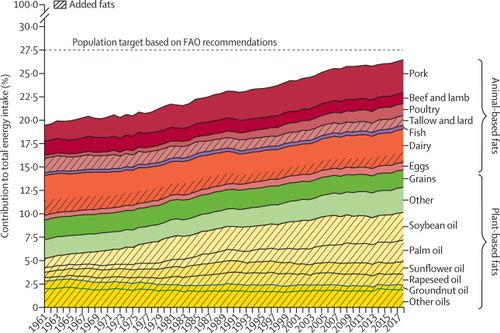
The widespread use of refined seed oils, however, is a recent phenomenon, emerging just over 150 years ago with industrial advancements in oil extraction and processing. These developments, coupled with the global trade of oilseeds, lower prices compared to traditional plant oils and animal-based fats, shifted dietary patterns, reducing reliance on animal fats in many regions.
How are seed oils made?
To make oil, seeds first go through big machines that cook and clean them at very high temperatures, up to 600°F (316°C), to get them ready for oil extraction. Once heated, the seeds are crushed to squeeze out much of the oil, producing a foamy, grayish-yellow liquid with a waxy texture. While this expeller-pressed oil is collected, the remaining crushed seed meal still holds residual oil.
To extract the leftover oil, the meal undergoes solvent extraction, where it is washed with hexane (a petroleum-based chemical) in a treatment chamber to pull out the remaining oil. The leftover solids, now hexane-treated, are sent for further processing before being used as an ingredient in animal feed.
The hexane-extracted oil then goes through multiple steps to remove most of the solvent and remaining impurities. It is later combined with the expeller-pressed oil in a crude oil tank, ready for the next stage. However, this crude oil is not yet edible. It still contains a range of contaminants, including hydratable and non-hydratable gums, free fatty acids, oxidized pigments like carotenoids, moisture, aldehydes, peroxides, heavy metals, waxes, and other undesirable byproducts.
To refine crude oil into a market-ready product that meets regulatory standards, it must undergo extensive refining, including steps like degumming, neutralizing, bleaching, and deodorizing.
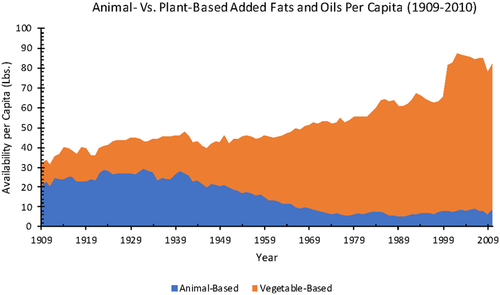
Graph: Animal vs. plant-based added fats and oils per capita (1909-2010)
This graph illustrates the historical changes in the availability of added fats and oils per capita in the United States between 1909 and 2010. It shows the decline in animal-sourced fats (such as butter, lard, and edible tallow) and the rise in plant-based fats (such as cooking oils, margarine, shortening, and salad oils), highlighting a significant dietary shift over the 20th century.
Credit: United States Dietary Trends Since 1800: Lack of Association Between Saturated Fatty Acid Consumption and Non-communicable Diseases.
An alternative to this intensive process is cold-pressing, a method that avoids high temperatures to help preserve the oil’s nutritional value and bioactive compounds. Because it minimizes chemical alterations and requires less intensive post-extraction treatment, cold-pressed oil is typically associated with premium plant oils, such as extra virgin olive oil or coconut oil, but also for some seed oils such as rapeseed oil and sesame oil.
Key events and scientific milestones
In 1780, German-Swedish chemist Carl Wilhelm Scheele demonstrated that fats contain a substance now known as glycerol. About thirty years later, French chemist Michel Eugène Chevreul further advanced this understanding by identifying fats as esters formed from glycerol and fatty acids.
In the 1890s, Procter & Gamble began using cotton seeds to make soap, due to a shortage of tallow (rendered animal fat). At the time, cottonseed oil was considered inedible and was mostly used as lamp fuel.

Picture: Cotton seed
Credit: Traceabilitymatrix
The method of hydrogenating oils, adding hydrogen to liquid PUFAs to make them solid, producing saturated and trans fats (TFA), was based on the gas-phase hydrogenation discovered by French chemist Paul Sabatier and later applied to fats in the liquid phase by German chemist Wilhelm Normann, who patented the process in 1903.
In 1907, German chemist Edwin C. Kayser developed a method to hydrogenate oils specifically for the production of solid fats. This breakthrough allowed Procter & Gamble to create a solid soap using seed oils instead of animal fat, leading to the launch of Ivory Soap.
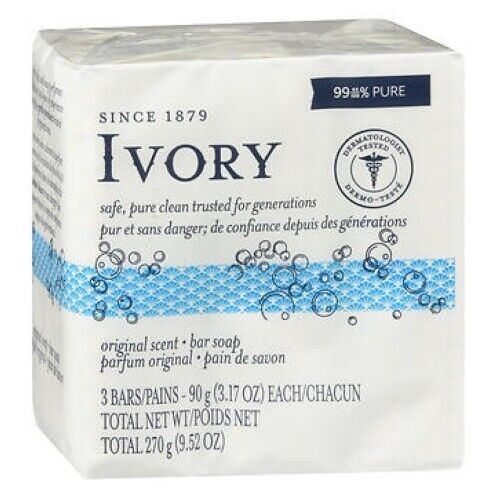
Picture: Ivory Soap
Credit: eBay
A few years later, in 1911, P&G adapted this process to produce Crisco, a hydrogenated cooking fat made from cottonseed oil. It was promoted as a cleaner, cheaper, and supposedly “healthier” alternative to cooking with animal fats.

Picture: Crisco
Credit: Walmart
After World War II, changes in animal feeding practices boosted the demand for soy production. American farmers began using defatted soy meal as livestock feed, which helped animals gain weight faster and increased profits. By the 1940s, most soybeans in the U.S. were processed to separate the oil from the meal.
Traditional vs. modern usage
For a long time, plant and some seed oils have been shaped by local ingredients and limited transport, making them key to different food cultures around the world. Olive oil became a staple in Mediterranean dishes like bruschetta. Sesame oil, which has been used for thousands of years in Asia and the Middle East, flavors dishes like bibimbap and Fattoush. Coconut oil adds its rich flavor to tropical meals such as Thai green curry. In India, mustard seed oil is commonly used in recipes like Aloo Posto.

Picture: Bruschetta
Credit: De bem com a comida
Beyond food, plant oils also held cultural and spiritual significance in ancient civilizations. In ancient Egypt, oils like castor, olive, and juniper/cypress oil were used in the mummification process. In Hinduism, sesame oil plays a central role in rituals, especially those related to death, where it is considered a “symbol of immortality.”
Plant oils have also played a role in health and healing across cultures. In traditional Chinese medicine, sesame seeds and its oil were thought to support the body by strengthening internal organs, increasing energy, building muscle, and replenishing marrow during times of weakness. In Morocco, argan oil has been used in folk remedies to ease pain and help people with knee problems move more easily.
And before electricity, plant and seed oils were commonly used as lamp fuel to light homes and temples.
Picture: Lighting the flame of devotion
Credit: ChatGPT
Today, plant oils go far beyond the kitchen; they’ve become essential ingredients in a wide range of everyday products and even in green technology. In the kitchen, these oils are now extensively relied on. Plant oils help give foods the right texture and taste. For example, shortening makes pastries light and crumbly. Special oils like avocado or almond oil bring rich, nutty flavors to snacks and sauces.
In the world of beauty and self-care, plant oils have become a favorite. Originally used in soap making, plant oils quickly caught the attention of the personal care industry. They are now widely found in skincare products, cosmetics, candles, and perfumes. In aromatherapy, plant-based oils often serve as carriers or "base oils" that blend with essential oils to create fragrance oils. On their own or in combination with other ingredients, they help hydrate and soothe the skin, making them popular in modern skincare routines.

Picture: Serenity in skincare: a natural ritual
Credit: ChatGPT
Some consider plant oils to play a role in sustainability. As the world looks for cleaner alternatives to fossil fuels, oils from plants are being turned into biofuels that can power vehicles and heat buildings. For instance, soybean oil is being used to make things like biodegradable plastics, foams, adhesives, and even car parts, offering a greener option to traditional petroleum-based materials.
They’re also useful on the farm. After oil is extracted from seeds, the leftovers, called oilseed meal, are packed with protein and used to feed animals. In some cases, small amounts of oil are added to animal feed too.
Mainstream vs. Alternative Views
Mainstream views generally promote unsaturated fats as the healthier type of fat, with specific recommendations for oils such as rapeseed and sunflower oil. This is largely because saturated and trans fats are advised to be limited, as they are linked to higher calorie intake and poorer blood lipid profiles, which can increase the risk of noncommunicable diseases like obesity and coronary heart disease (CHD). As a result, unsaturated fats are widely encouraged as a healthier alternative to replace saturated fats in the diet.
Alternative
While mainstream health guidelines tend to promote unsaturated fats, especially those from seed oils, as a heart-healthy alternative to saturated fats, some experts from alternative health perspectives have raised critical concerns.
Dr. Catherine Shanahan, a physician and biochemist, argues that highly processed seed oils are a major contributor to chronic diseases. She highlights the role of oxidative stress, triggered by the unstable PUFAs in these oils, as a root cause of chronic inflammation, which underlies conditions such as heart disease, obesity, and even neurodegeneration.
Similarly, Dr. Paul Saladino, known for his advocacy of animal-based diets, points to a possible connection between high intake of seed oils and metabolic dysfunction. He raises concerns that excessive consumption of these fats may negatively affect mitochondrial function (the body's energy factories), promote inflammation, and interfere with optimal hormonal and immune function.
Science journalist and author Nina Teicholz questions the strength of the evidence behind the diet-heart hypothesis, the idea that saturated fat causes heart disease, and argues that this shift in dietary recommendations may have overlooked the potential risks of replacing traditional animal fats with industrial seed oils.
Due to the widespread adoption of industrialized Western diets, the balance between omega-6 and omega-3 fatty acids, once estimated to be around 1:1 or 2:1, has shifted dramatically in favor of omega-6, with modern ratios closer to 10:1 or even 20:1. This imbalance is largely attributed to the heavy use of omega-6-rich seed oils. Some alternative viewpoints suggest the omega-6 overload is the reason for the prevalence of inflammatory diseases.
What the science says
PUFAs, found abundantly in plant and seed oils, play a complex role in human health. The number of double bonds in a fatty acid determines how easily it oxidizes; the more double bonds, the more chemically reactive and prone to oxidation it becomes. Because PUFAs contain multiple double bonds, they are more susceptible to oxidation than other fats.
Despite this vulnerability, moderate amounts of PUFAs are essential for human health. Early animal studies showed that rats fed fat-free diets developed serious health issues, such as skin lesions, organ degeneration, and impaired growth, highlighting the necessity of LA and ALA in the diet. In humans, PUFA deficiency can cause problems such as dermatitis (skin inflammation) and digestive problems. For pregnant women, sufficient intake of n-3 PUFAs is particularly important for fetal brain and vision development. However, omega-3 deficiency is still common; study shows that roughly 25% of pregnant women in the U.S. do not meet the recommended intake levels. Beyond developmental benefits, PUFAs also help maintain cellular structure, comprising 30%-40% of the fatty acids in cell membranes.
However, the same chemical structure that makes PUFAs beneficial also makes them delicate. Because they oxidize easily, they can become targets for free radicals and oxidation reactions. When this happens, it can lead to oxidative stress, a state of imbalance in the body where there's more damage occurring than the body can repair. This process can harm the cell membrane, damage DNA and proteins, and release harmful toxins, potentially contributing to a variety of chronic health problems.

Graph: Vegetable oil consumption per capita in developed and developing countries, the world, and Armenia, kg 15
This graph illustrates the per capita vegetable oil consumption trends from 2005 to 2021, comparing developed countries, developing countries, and the global average. Key observations include consistently higher consumption in developed nations (peaking around 28 kg/year) compared to developing countries (around 10–11 kg/year), with global figures closely tracking the developed world's upward trend, reflecting dietary shifts toward industrialized food systems.
Credit: RA Vegetable Oil Market Competitive Situation Assessment.
The Seven Countries Study
The Seven Countries Study, conducted by Ancel Keys and his teams between 1958 and the 1970s, was one of the first major international studies to examine how diet, lifestyle, and other risk factors affected cardiovascular disease (CVD) across different countries and cultures. The study found that higher intake of saturated fat was associated with elevated serum cholesterol levels and increased risk of heart disease. These findings helped popularise diets like the traditional Mediterranean diet and the traditional Japanese diet, both of which were linked to lower rates of CHD and all-cause mortality.
However, the study has been criticised for selection bias. Countries like France and Switzerland, which have high intakes of saturated fat but relatively low rates of heart disease, a phenomenon later known as the "French Paradox," were not included in the study.
The Framingham Heart Study, ongoing since 1948, has produced over 3,000 publications. While this long-term study has established that higher total blood cholesterol levels are associated with an increased risk of heart disease, and that higher HDL (“good”) cholesterol levels are protective, it has not consistently identified saturated fat consumption as a direct cause of increased mortality. In fact, the relationship between saturated fat intake, cholesterol levels, and heart disease has proven to be complex and context-dependent, with different studies producing contradictory results depending on the population, dietary patterns, and other lifestyle factors involved.
The Lyon Diet Heart Study (1994–1999), a randomized controlled trial in heart attack survivors, found that a “Mediterranean-style” diet rich in MUFAs and omega-3 PUFAs led to a 70% reduction in cardiovascular events, compared to a low-fat diet. The trial showed a 30% reduction in heart attack, stroke, and CVD risk in the Mediterranean diet groups.
The conventional diet-heart hypothesis suggests that replacing saturated fats with plant-sourced oils that are high in LA (e.g. corn oil, soybean oil) can help lower cholesterol levels in the blood, which may reduce the risk of heart disease. A reanalysis of data from 1968-1973 found that replacing saturated fat with corn oil lowered serum cholesterol but did not improve health outcomes, thus failing to support the original hypothesis. Another Australian study found a similar increase in mortality when saturated fats were replaced with omega-6-rich seed oils.
Individuals with heart risk
According to the American Heart Association, swapping out saturated fats for unsaturated fats found in plant oils may help lower “bad” LDL cholesterol and support overall cardiovascular health. Individuals on plant-based or vegetarian diets
For people who avoid animal products, plant oils are an important source of essential fatty acids, which are needed for bodily functions like cellular health and brain function. Ideal choices are olive oil or coconut oil.
People needing to control cholesterol
While the cholesterol-heart disease hypothesis remains controversial, with some evidence questioning the direct impact of dietary cholesterol on heart health, many health authorities still recommend managing blood cholesterol levels, especially for individuals at higher CVD risk. Plant oils rich in MUFA and PUFA, such as olive and canola oil, can lower LDL cholesterol levels, supporting cardiovascular health when used in place of saturated fats.
A small but fascinating study focused on a group called “Lean Mass Hyper-Responders” (LMHR)—lean, healthy individuals who develop very high LDL cholesterol on low-carb or keto diets, along with high HDL cholesterol and low triglycerides. In this experiment, adding 12 Oreo cookies (about 100g of carbohydrates) to one's daily diet dropped their LDL by 71%, while a strong statin only lowered it by 32.5%. The result supports the theory that very low-carb diets can raise LDL levels in some people, and adding Oreos may reverse it. But a big disclaimer: this was just one person’s result, so don’t start swapping statins for Oreos just yet!
Individuals with an omega-6 imbalance
Too much omega-6, especially from refined seed oils like soybean, corn, or sunflower oil, can throw off the body's balance with omega-3s. This may potentially promote inflammation over time, particularly if omega-3 intake is low. People with inflammatory conditions or under high stress
Some evidence suggests that in extreme situations, like during major infections, trauma, or chronic inflammation, having a high omega-6 to omega-3 ratio might worsen symptoms, such as swelling or blood clotting risk. Allergies
People with specific food allergies should be mindful of the source of vegetable oils, as some are derived from common allergens. For example, soybean oil, peanut oil, and almond oil can pose risks to individuals allergic to soy, peanuts, or tree nuts. It's important not only to check the type of oil used for cooking but also to read food ingredient labels carefully to avoid accidental exposure.
This information is for general guidance only and does not replace medical advice. Consult a healthcare professional before making any dietary changes, especially if you have existing health conditions.
How to stack it?
Mainstream daily recommendations
The WHO recommendation for preventing diet-related chronic diseases suggests that fat should provide 15–30% of total energy intake, with specific guidelines for different types of fats:
- Saturated fat: No more than 10% of total energy
- Polyunsaturated fats: 6–10%, with
- n-6 PUFAs: 5–8%
- n-3 PUFAs: 1–2%
- Trans fats: Less than 1% of total energy
- The remaining percentage should ideally come from monounsaturated fats (i.e., total fat - saturated fat - PUFA - trans fat = MUFA)
A mix of quantitative and qualitative recommendations is commonly used in national guidelines. For example, in the UK, the NHS recommends that:
- Men should consume no more than 30g of saturated fat per day
- Women should consume no more than 20g
- Children should consume even less, depending on age and needs
In Portugal, the national dietary guidelines suggest 1–3 servings of oils or fats per day. Portion sizes include: 1 tablespoon of olive oil (10g)
- 1 teaspoon of lard (10g)
- 4 tablespoons of cream (30ml)
- 1 tablespoon of butter or margarine (15g)
These guidelines also recommend reducing the intake of fats from animal sources and prioritizing olive oil as the preferred fat. The effectiveness of these guidelines and suggestions should be evaluated based on public health outcomes; however, given current health trends, their overall impact remains uncertain.
Alternative recommendations
Some advocates within the natural health community promote a seed-oil-free diet alongside higher consumption of animal fats, as an alternative approach to achieving health outcomes often pursued through more conventional dietary advice. Proponents suggest that eliminating seed oils may contribute to benefits such as weight management, reduced inflammation, improved skin health, and other wellness-related outcomes. As a result, some recommend avoiding seed oils entirely, a stance that differs significantly from mainstream medical guidance.
It's important to note that this perspective typically excludes plant-based oils derived from the fruit of the plant, such as olive oil and coconut oil, which are generally regarded as health-supportive across both conventional and alternative health circles.
As always, anyone considering dietary changes should seek advice from a qualified healthcare professional.
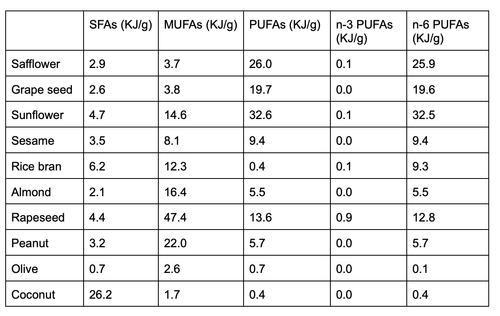
Table 2: Energy values (KJ/g) of different fatty acid groups derived from 1g of plant oils.
Sourcing
Plant oils can come from a wide range of sources, and the type of oil depends on both the ingredient and how it's processed. When talking about plant oils, one common distinction is between refined and unrefined oils.
Refined oils go through processing steps like bleaching and deodorizing to improve shelf life, color, and flavor stability. Unrefined oils, on the other hand, are minimally processed and tend to retain more of the original flavor and nutrients, but they also have a shorter shelf life and lower smoke point.
A good example to illustrate this is olive oil, which comes in several types based on how it's processed:
- Extra virgin olive oil – the highest quality, cold-pressed, and unrefined.
- Virgin olive oil – also cold-pressed but with slightly less strict quality standards than extra virgin.
- Refined olive oil – made from lower-quality olives and refined to remove impurities.
- Olive oil (pure or regular) – a blend of refined olive oil and a small amount of virgin oil to improve flavor.