

What is Sleep?
Sleep
Sleep is a natural, reversible state of reduced consciousness and physical activity in which the body and brain undergo restorative processes. It is marked by altered brain activity, decreased responsiveness to external stimuli, and distinct stages, including non-REM and REM sleep. Sleep supports vital functions such as memory consolidation, tissue repair, immune regulation, and emotional processing.
Circadian Rhythm and Sleep Pressure
There are two key factors that regulate sleep and wakefulness: circadian rhythm and sleep pressure.
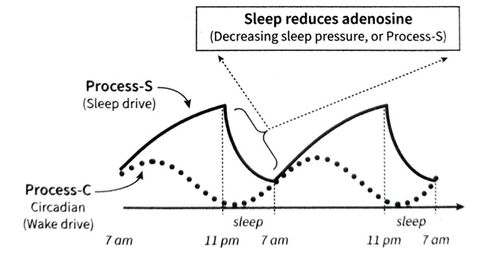
Graph: The Two Factors Regulating Sleep and Wakefulness Credit: Why We Sleep: Unlocking The Power of Sleep and Dreams.
Circadian Rhythm
The circadian rhythm (also called Process-C), regulated by the brain’s suprachiasmatic nucleus (SCN), controls daily cycles of sleepiness and alertness. Beyond sleep, it also influences a wide range of essential functions such as eating patterns, mood, metabolism, hormone release, physical performance, and can affect the timing of birth and is linked to time of death. On average, the human circadian rhythm runs slightly longer than a day—about 24 hours and 15 minutes.
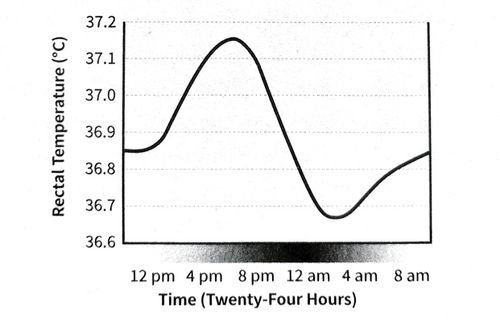
Graph: Typical 24 hour circadian rhythm (core body temperature)
This graph shows one of the physiological changes regulated by the SCN: body temperature fluctuates independently of whether a person is awake or asleep.
Sleep Pressure
Sleep pressure (also called Process-S) is a physiological urge to sleep, driven by the gradual buildup of adenosine. As adenosine levels rise, it gradually lowers activity in brain areas that keep us alert while increasing signals that promote sleep—usually leading to a strong need for rest after 12 to 16 hours of wakefulness. This signal can be temporarily blocked by caffeine, which prevents adenosine from binding to its receptors.
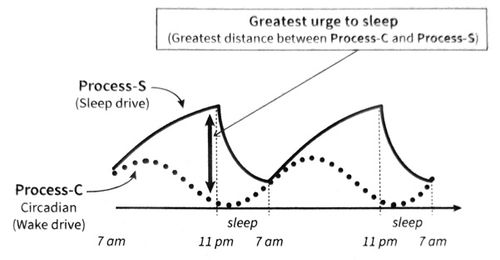
Graph: The Urge to Sleep Credit: Why We Sleep: Unlocking The Power of Sleep and Dreams.
Melatonin
Melatonin is a hormone released by the pineal gland in response to darkness. It acts as a signal that it's nighttime, helping the brain and body know when to prepare for sleep. While melatonin helps regulate when sleep happens, it doesn’t actually create sleep itself. In the morning, light exposure suppresses melatonin production, signaling the body that it's time to wake up.
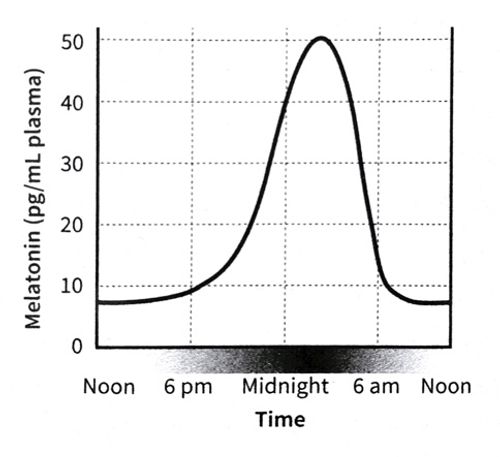
Graph: The cycle of melatonin
A brief physiology
In 1729, French scientist Jean-Jacques d’Ortous de Mairan conducted a fascinating experiment with Mimosa pudica—a plant known for its leaves that open during the day and close at night. This daily movement, later called “sleeping leaves” by Charles Darwin, appeared to follow the sun.
Sleep habits vary widely across cultures
Anthropologist Marcel Mauss observed a range of global practices: some people sleep on the floor, others in hammocks, and the Masai of East Africa are even known to sleep while standing. In Kenya, the Ciabra tribe separates sleeping arrangements by gender; the Aché people in Paraguay use mats, while the Efe in Zaire rest on leaves.
- Monophasic
- Biphasic
- Polyphasic
Biphasic Sleep includes a longer sleep at night and a shorter nap in the early afternoon (siesta). It is typical in countries like Spain and parts of South America. The siesta helps accommodate late-night social activity and boosts daytime performance. However, this pattern is declining due to globalization, economic demands, and modern ideals that associate napping with laziness or inefficiency.
Polyphasic Sleep consists of several sleep periods spread throughout the day and night. It includes a core nighttime sleep and flexible daytime naps. This pattern is common in various parts of the world and includes culturally specific practices like Japan’s inemuri—a socially accepted form of dozing in public spaces while remaining socially “present.” While polyphasic sleep can enhance adaptability and alertness, it is not universally accepted and varies greatly between cultures.
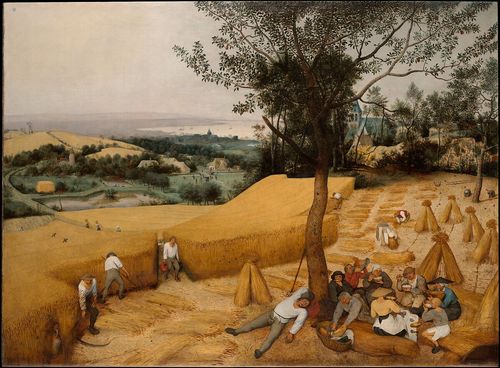
Art work: The Harvesters Credit: Dutch artist Pieter Breughel the Elder
Beyond cultural differences, modern technology—especially artificial lighting—has profoundly influenced sleep behavior. Before the invention of electric power stations (like Edison’s in London in 1882), daily activities typically ended at sunset due to limited light sources. Among hunter-gatherer societies like the Hadza and San, nighttime activities were brief and centered around communal fires, often involving storytelling or singing.
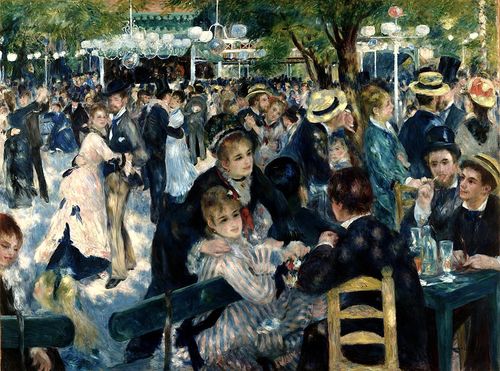
Art work: Bal du moulin de la Galette Credit: Pierre-Auguste Renoir
Mainstream vs. Alternative Views
Mainstream
According to the American Academy of Sleep Medicine (AASM) and the Sleep Research Society (SRS), adults should aim for at least seven hours of sleep per night to maintain optimal health. Sleep plays a critical role in physical and mental well-being; research links insufficient sleep to a wide range of health issues, including hypertension, obesity, type 2 diabetes, impaired immune function, cardiovascular disease, mood disorders, neurodegenerative conditions, dementia, and even loneliness. Beyond these broad health outcomes, researchers are increasingly interested in how sleep affects specific biological processes, including metabolism, hormone regulation, immune response, and gene expression. These underlying mechanisms help explain why even moderate sleep loss can have far-reaching consequences on long-term health.
Alternative
While mainstream approaches tend to emphasize sleep quantity—such as achieving a consistent seven to eight hours per night—alternative perspectives focus on sleep quality, flexibility, and alignment with individual natural rhythms. One well-known advocate is cognitive neuroscientist Sara Mednick, who promotes napping as a powerful tool for mental and physical restoration. She describes naps as a “miracle drug” that enhance alertness, creativity, memory, and emotional regulation, all without the side effects of stimulants like caffeine. Mednick highlights a natural afternoon dip in alertness, typically between 2:00 and 3:00 p.m., during which a short nap can significantly boost cognitive function—often more effectively than a cup of coffee.
In the era of biohacking and self-tracking, smart devices have become increasingly popular tools for optimizing sleep. Products like the Oura Ring, developed and popularized by wellness entrepreneur Dave Asprey, track physiological indicators such as heart rate variability, body temperature, blood oxygen levels, and sleep stages to generate personalized sleep scores. These insights help users understand how factors like stress, diet, and exercise impact their rest.
General population
Jet lag
Jet lag is a temporary sleep disorder caused by rapid travel across time zones, which disrupts the body's internal circadian clock. Symptoms can last for several days after arrival, as the SCN adjusts slowly, typically by about one hour per day.
Caffeine drinkers
Caffeine is a natural stimulant that works by blocking adenosine receptors in the brain, which temporarily reduces sleep pressure and increases alertness. It's commonly found in coffee, tea, chocolate, energy drinks, and cola-type beverages. While caffeine can help people feel more awake, consuming large amounts—especially later in the day—can lead to insomnia. Sensitivity to caffeine varies from person to person, influenced by genetics and age.
Alcohol drinkers
Alcohol
Alcohol acts as a sedative, calming your brain by slowing down nerve activity. It starts by relaxing the prefrontal cortex, the part of your brain that controls impulses, which is why you might feel more social and less inhibited after a drink. Many people think alcohol helps them sleep better, but that’s a myth—it doesn’t help you fall asleep easily or improve your sleep quality. But this isn’t real sleep; it’s more like a light form of anesthesia, not the natural, healthy rest your body needs.
People who suffer sleep disorders
People who suffer sleep disorders should seek professional evaluation to determine the underlying causes and receive appropriate treatment. Depending on the diagnosis, interventions may include cognitive behavioral therapy for insomnia (CBT-I), lifestyle adjustments, medical treatments, or the use of carefully monitored sleep aids. Early intervention can significantly improve quality of life, cognitive functioning, and overall health.
How to stack it?
Having good sleep hygiene can help you have a good night's sleep. Avoid the modern light
Brain’s internal clock, the SCN, is regulated by light, particularly blue light. Natural darkness signals the release of melatonin, promoting sleep. But artificial light messes with this process, delaying melatonin release by 2–3 hours and making it harder to fall asleep.
- Use dim, warm-colored lights in the evening.
- Skip bright overhead lights.
- Wear blue-light-blocking glasses in the evening.
- Put up blackout curtains to keep your room dark.
- Add software to your devices to cut down on blue light at night.
Avoid alcohol
Drinking even a moderate amount of alcohol in the evening can disrupt your sleep quality and affect how well your brain processes memories. For the best sleep health, it’s recommended to avoid alcohol at night altogether.
Cooler the room
For the best sleep, your body needs to cool down by about 1°C (2–3°F). A cool room helps kick start this process, making it easier to drift off. The perfect bedroom temperature for most people is around 65°F (18.3°C), though it can vary depending on your age, gender, or personal comfort.
Your hands, feet, and head are key players in releasing heat to cool your core. Simple habits like splashing water on your face or letting your arms and legs peek out from under the covers can naturally boost this cooling. A hot bath before bed can also help—though you might think it works because it warms you up, it actually brings blood to your skin’s surface. When you step out, the heat escapes, your core temperature drops, and you fall asleep faster.
Make a schedule
Sticking to the same wake-up time every day, even on weekends, can help keep your sleep schedule steady and improve sleep, especially if you have insomnia—though it often means using an alarm.
Alarms can be tough on your body, causing a sudden spike in blood pressure and heart rate by activating your fight-or-flight response. Hitting the snooze button makes it worse, repeatedly stressing your heart and nervous system, particularly if you do it daily. To avoid this strain, skip the snooze and wake up just once.
Common questions
Can melatonin supplement help solve insomnia?
Melatonin supplements can help with certain types of sleep issues, but they are not a universal solution for insomnia.
- Jet lag – help reset internal clock when crossing time zones
- Delayed sleep phase syndrome – for “night owls” who have trouble falling asleep at a typical bedtime
- Shift work – can support adjusting to irregular work hours
- People with specific conditions shows declines in melatonin production – older adults with age-related insomnia, children with autism spectrum disorder and ADHD
What they can’t help: General insomnia – this includes trouble falling/staying asleep without a clear timing issue. Stress- or anxiety-related insomnia. Poor sleep habits – melatonin cannot override screen time, caffeine effect, irregular schedule etc.
How do I know if I got enough sleep?
Here are two quick questions to help you figure it out: Could you fall back asleep at 10 or 11 a.m., just a few hours after waking?
- If yes, that’s a strong sign you didn’t get enough sleep—either in quantity or quality.
Can you get through the morning without needing caffeine?
- If not, there’s a chance you’re using caffeine-contained foods or drinks to cover up regular sleep deprivation.
Still unsure? Try these bonus checks:
- Would you sleep past your usual wake-up time if you didn’t set an alarm?
- If so, your body’s probably asking for more sleep than you’re giving it.
Do you catch yourself rereading the same sentence multiple times while working or studying?
- Classic tired-brain move. It usually means you’re running low on mental energy from not sleeping enough.
Ever forget what color the last few traffic lights were while driving?
- That might feel like distraction, but it can actually be a red flag for sleepiness.
The STATED sleep health questionnaire, developed by sleep scientist Daniel Buysse, assesses five key aspects of healthy sleep: Satisfaction, Alertness, Timing, Efficiency, and Duration. It’s a simple yet effective tool for evaluating your sleep quality.
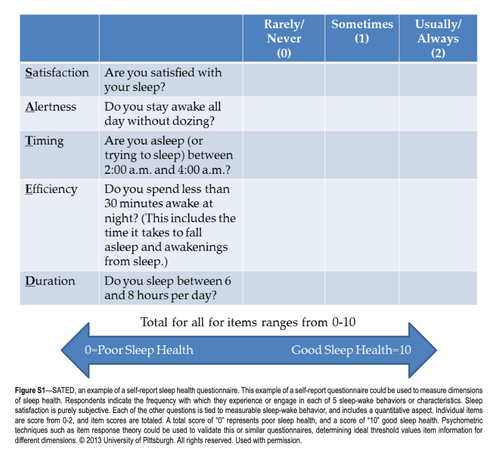
Credit: Sleep health: can we define it? Does it matter?
Getting enough good sleep really does make a difference in how you think, feel, and function—so it's worth paying attention to these little clues!