

Dietary Guidelines for Americans, 2025-2030
The recently released Dietary Guidelines for Americans, 2025-2030, making the biggest shift in nutritional guidance in decades, by completely flipping the old food pyramid upside down.
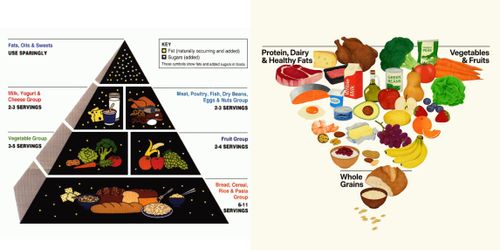
Image: 1992 Food Pyramid (left) vs. 2026 Food Pyramid (right)
Why change?
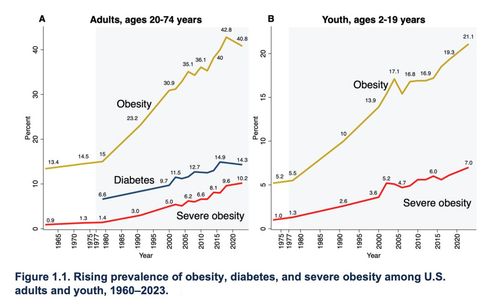
In the US, around half of adults have pre-diabetes or diabetes, 75% of adults live with at least one chronic condition, and about 90% of healthcare spending goes toward treating chronic disease. Many of these conditions are strongly linked to lifestyle and dietary patterns.
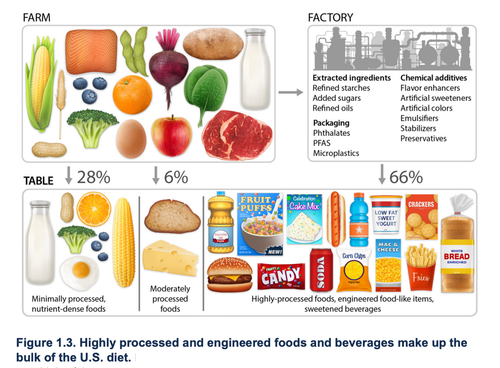
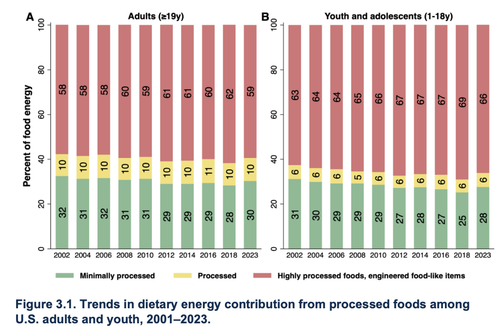
The report notes that highly processed foods, beverages, and engineered food-like products now make up roughly two thirds of the American diet. Against this backdrop, the updated guidance aims to shift attention back toward whole, minimally processed foods as a priority.
How well is the new pyramid researched?
The research relies on advanced methodology, including Umbrella Reviews (systematic reviews of existing meta-analyses) to synthesize vast amounts of data. The committee utilized the GRADE (Grading of Recommendations, Assessment, Development, and Evaluation) framework to categorize the certainty of evidence, drawing from both long-term prospective cohort studies and gold-standard randomized controlled trials (RCTs).
The appendices of the report provide exhaustive scientific summaries for critical health factors, deep dives into the physiological impacts of Highly Processed Foods (HPF), Added Sugars and Beverages, and Fats and Carbohydrates. It also admitted the current limitation that many existing recommendations rely on non-randomized evidence, which can be vulnerable to confounding variables (outside factors like lifestyle) and measurement errors. With a prioritising encouragement for more clinical trials that can provide cause-and-effect explanation in the future.
What's the main change?
From plate to pyramid
Earlier US guidelines used the MyPlate model, showing what a balanced meal looks like by dividing a plate into fruits, grains, vegetables, protein, and dairy.
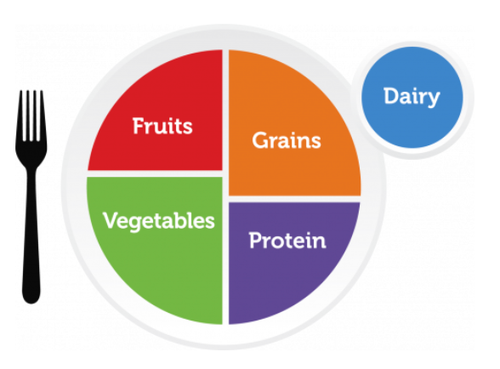
Image: MyPlate
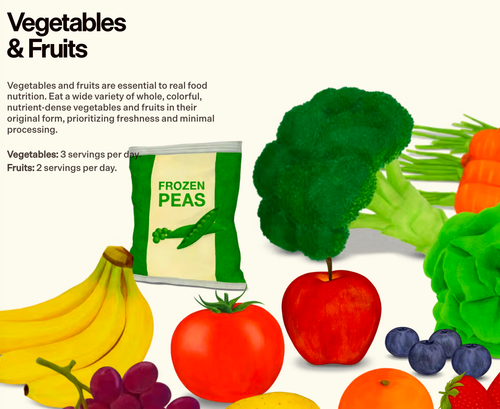
The latest update introduces an inverted “eat real food” pyramid. Instead of focusing on a single meal, it shows overall dietary priorities. Foods are grouped into three main categories: protein with dairy and healthy fats, vegetables and fruits, and whole grains. The key change is how these foods are prioritised and proportioned.
Grains: now the smallest group
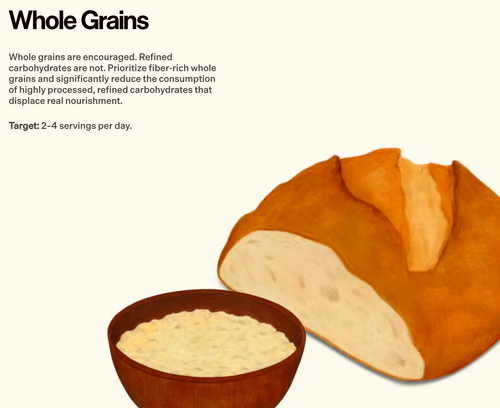
Grains have been moved to the bottom of the pyramid and make up the smallest category. The guidelines still favor whole and traditionally prepared grains such as oats, rice, and true sourdough, while recommending reduced intake of refined and packaged grain products. In earlier guidelines, grains were recommended at 6 to 11 servings per day. The updated version reduces this to around 2 to 4 servings daily.
Protein and vegetables: the foundation
Protein and vegetables now form the foundation of real food meals. The guidelines highlight their importance for muscle health, metabolic function, gut health, and stable energy levels. Emphasis is placed on high quality, nutrient dense protein from both animal and plant sources.
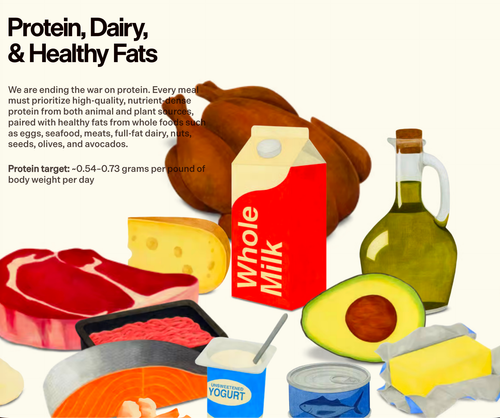
Previously, protein guidance was given in fixed servings, such as daily ounces of meat or cups of dairy. The new approach recommends protein intake based on body weight, roughly 0.54 to 0.73 grams per pound.
Healthy fats
Foods that naturally contain fats, including meat, seafood, dairy, nuts, olives, and avocados, are encouraged for their role in brain health, hormone function, and nutrient absorption, particularly fat soluble vitamins. The guidelines maintain the recommendation to limit saturated fat to under 10% of daily energy intake to manage cardiovascular risk. For cooking, oils rich in essential fatty acids such as olive oil are recommended, while butter or beef tallow may also be used in moderation. When choosing dairy, the full-fat dairy with no added sugar now is promoted.
Added sugars
Added sugars are not recommended, especially for children. In contrast, naturally occurring sugars found in whole fruits and plain dairy products are considered acceptable, as they come packaged with fiber, protein, and micronutrients.
In the latest report, highly processed foods are treated as a distinct category supported by a more rigorous evidence base. The recommendations offer clear, everyday examples of these foods, including packaged, prepared, and ready to eat products that are high in added sugars and sodium, such as chips, cookies, and candy.
Whole food
Whole food is prioritised by all means. By defining them as "foods prepared with few ingredients and no added sugars, industrial oils, artificial flavors, or preservatives," the new guidelines return the focus to the value of traditional nutrition. Put simply: it should be recognisable as food.
Challenges
The guidelines continue to recommend limiting saturated fat to no more than 10% of daily calories, while at the same time encouraging higher protein intake from sources such as meat and full fat dairy. This creates a practical tension. Fat provides 9 calories per gram, compared with 4 calories per gram for protein or carbohydrates. Increasing consumption of meat and full fat dairy while staying within saturated fat limits and maintaining overall calorie balance requires careful portion control. In practice, this may be difficult to reconcile with the broader message to prioritize protein at every meal.
Bottom line
What this means in practice: Build meals around protein and vegetables rather than grains
- Learn how to identify highly processed foods, for example, -ose indicates sugar in nutrition information
- A whole food is generally a better choice than a low fat processed snack
- Food quality matters more than precise macronutrient ratios
Shifting back to traditional whole foods is more than a dietary change, it's a return to our roots. Practicing and adapting new habits can feel overwhelming at first. What's the biggest obstacle you face when trying to eat "closer to the source"? Whether it's grocery shopping or meal prep, let's start a conversation and help each other make the transition!